ServicesAboutCoverageGet a Quote
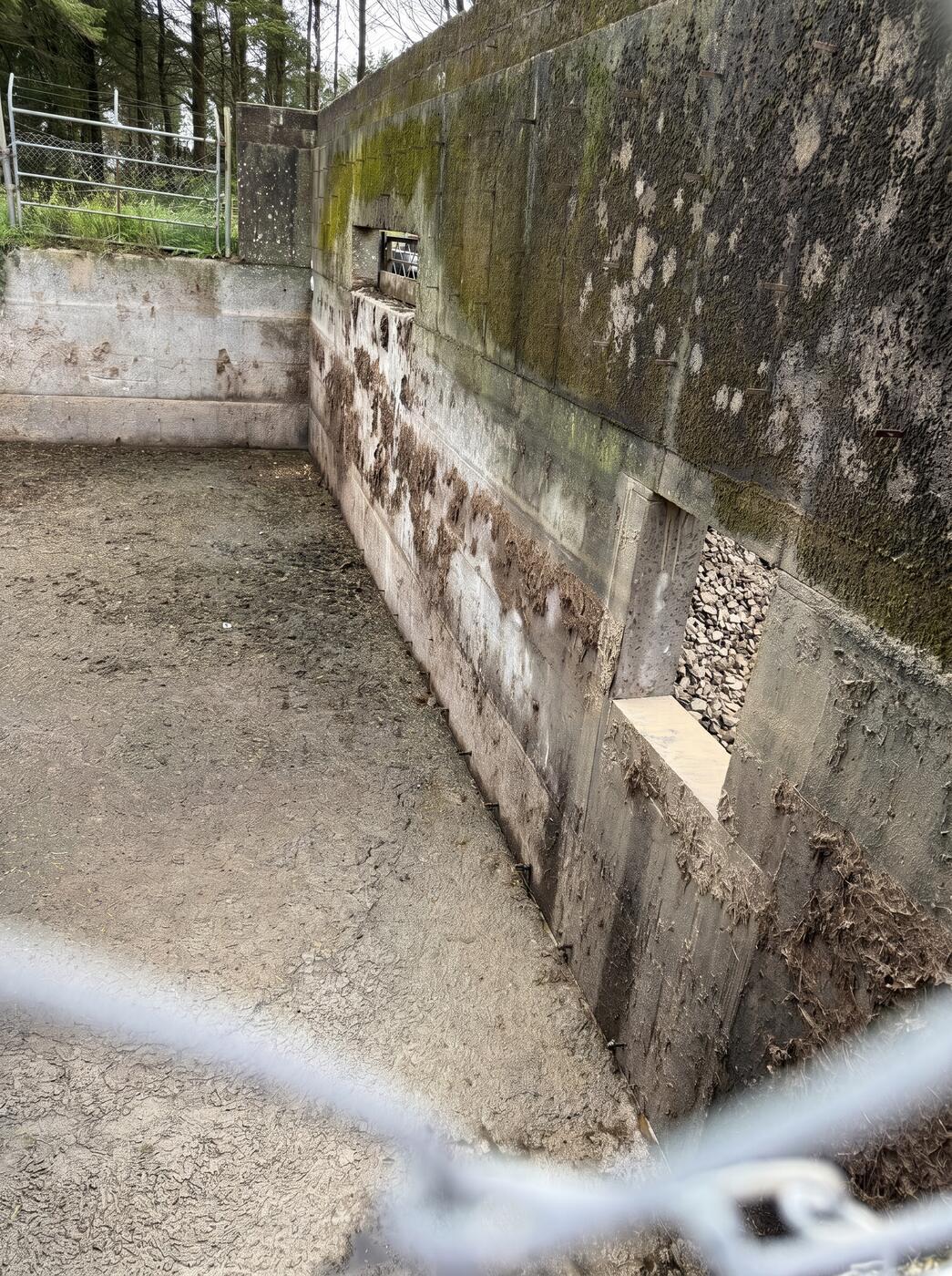
A weathered concrete retaining wall in an excavated trench with a rectangular section cut out of it, the wall around the opening left standing

Controlled
demolition across
Kerry and Munster

Take out the concrete you want gone and leave the rest standing. We cut the section free, burst it apart and crush it down, with low noise and low vibration the whole way through.
Take out one part,
leave the rest sound

Controlled demolition is the measured removal of a concrete element without wrecking the structure around it. We saw a clean line to isolate the section with a diamond blade, set hydraulic splitters into cored holes to crack it apart, and crush the pieces down with a hydraulic muncher. Because none of that hammers the concrete, the building is not shaken while the work is going on.

That makes it the method to reach for near live services, beside structural elements that have to stay, and in buildings that are still occupied while the work happens. Every job is propped and supported before anything is removed, and runs off a risk assessment and method statement agreed with you before the first cut.

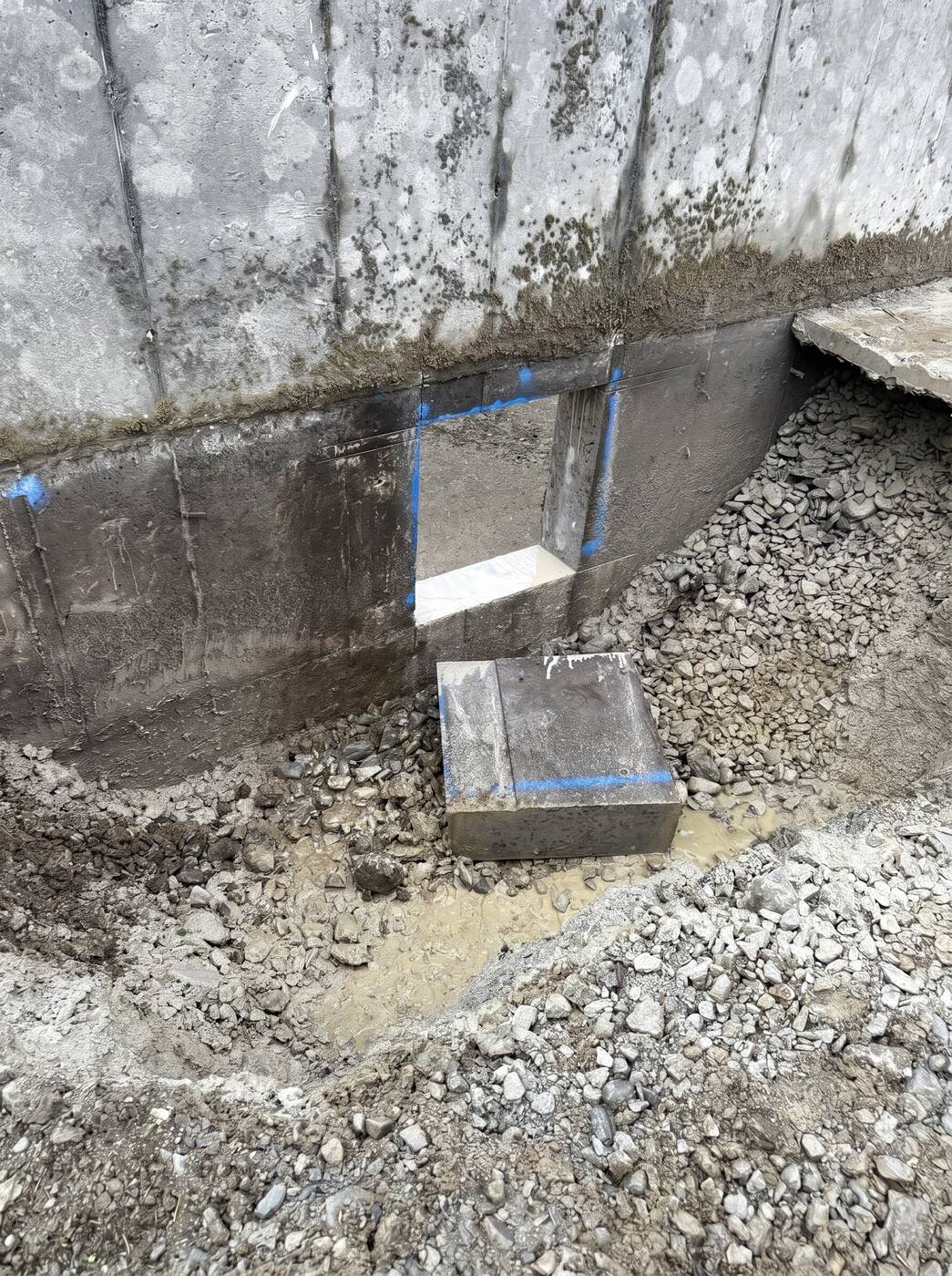
A foundation wall in a gravel trench with a rectangular cut out marked in blue chalk and the cut concrete block lifted out and set down beside it

The numbers that
matter on site

Low
Vibration next to a breaker
Quiet
Compared with percussion
Full
Method statement and RAMS
Clean
Waste cleared on handover

Cut, burst, crush,
clear away

Cut to isolate the section

We diamond saw a clean line around the piece coming out, top, bottom and sides, so the break stops exactly where the drawing says. The wall, slab or beam you are keeping is never shaken loose with it.

Split it apart with hydraulics

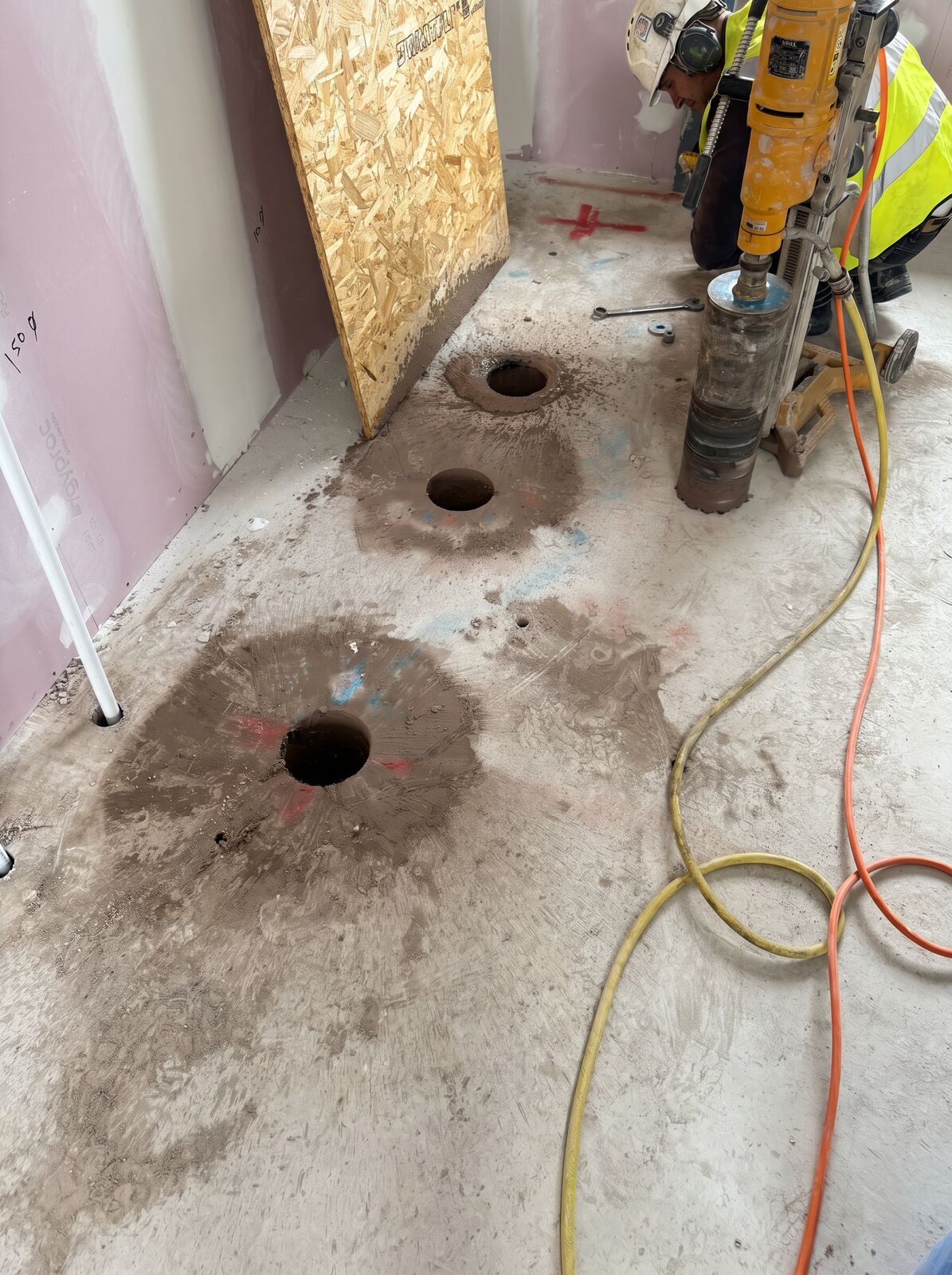
Holes are cored into the isolated concrete and a hydraulic splitter is set inside. The ram pushes out and cracks the section apart along the line, with no hammer action and very little noise. It suits live services and occupied rooms for that reason.

Crush the lumps down to size

A hydraulic crusher on a mini-excavator bites the cut sections into pieces small enough to handle and cart. The rebar is sheared and pulled out as we go, so the concrete and the steel come apart on site.

Propping, RAMS and a clean exit

Temporary propping goes in before anything comes out, and every job runs off a risk assessment and method statement agreed with you first. Rubble, dust and steel leave with us, and the floor gets a sweep before we go.

Cutting a section
free, off the tools

A few controlled removals from the van, where we cut the section free and took it out without shaking the rest. Photographed on site as we left them.

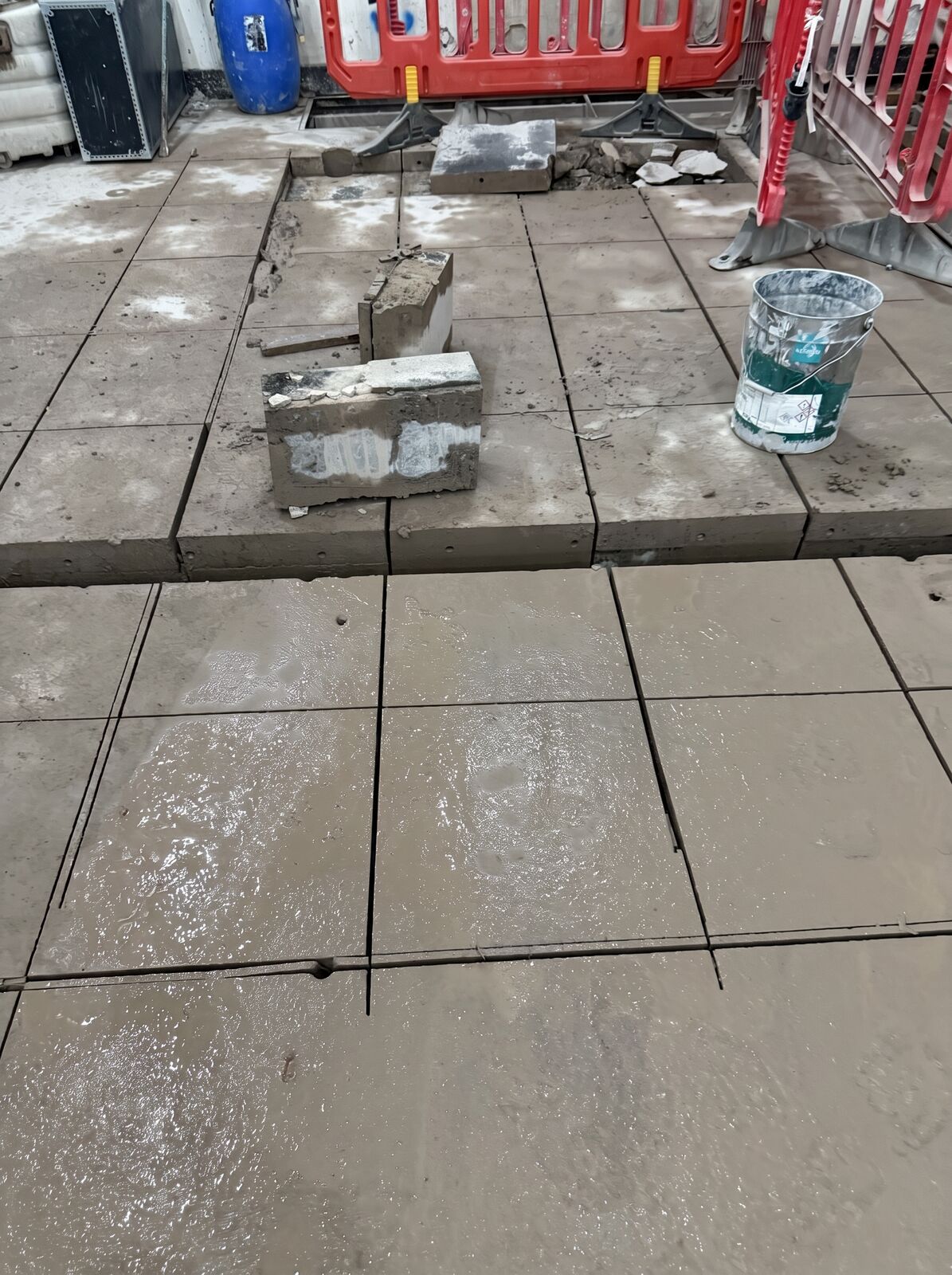
A concrete floor scored into a grid of clean diamond saw cuts with a cut section lifted out and a removed block set on top, a site barrier behind
Saw cut, then lifted out
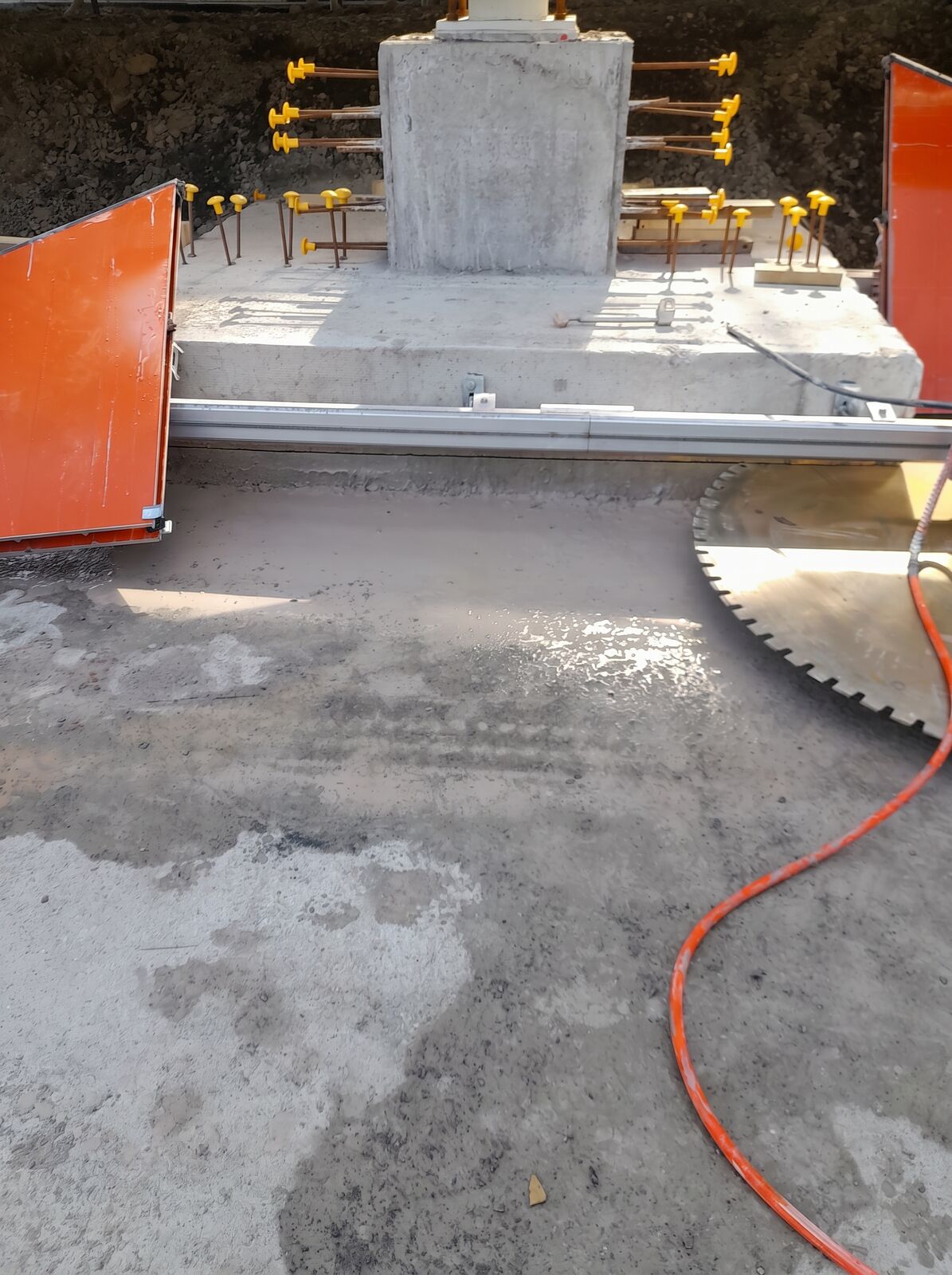
A track mounted wall saw set up around a concrete footing with the diamond blade lowered to the slab and yellow rebar caps marking the starter bars
Wall saw, cutting a section free
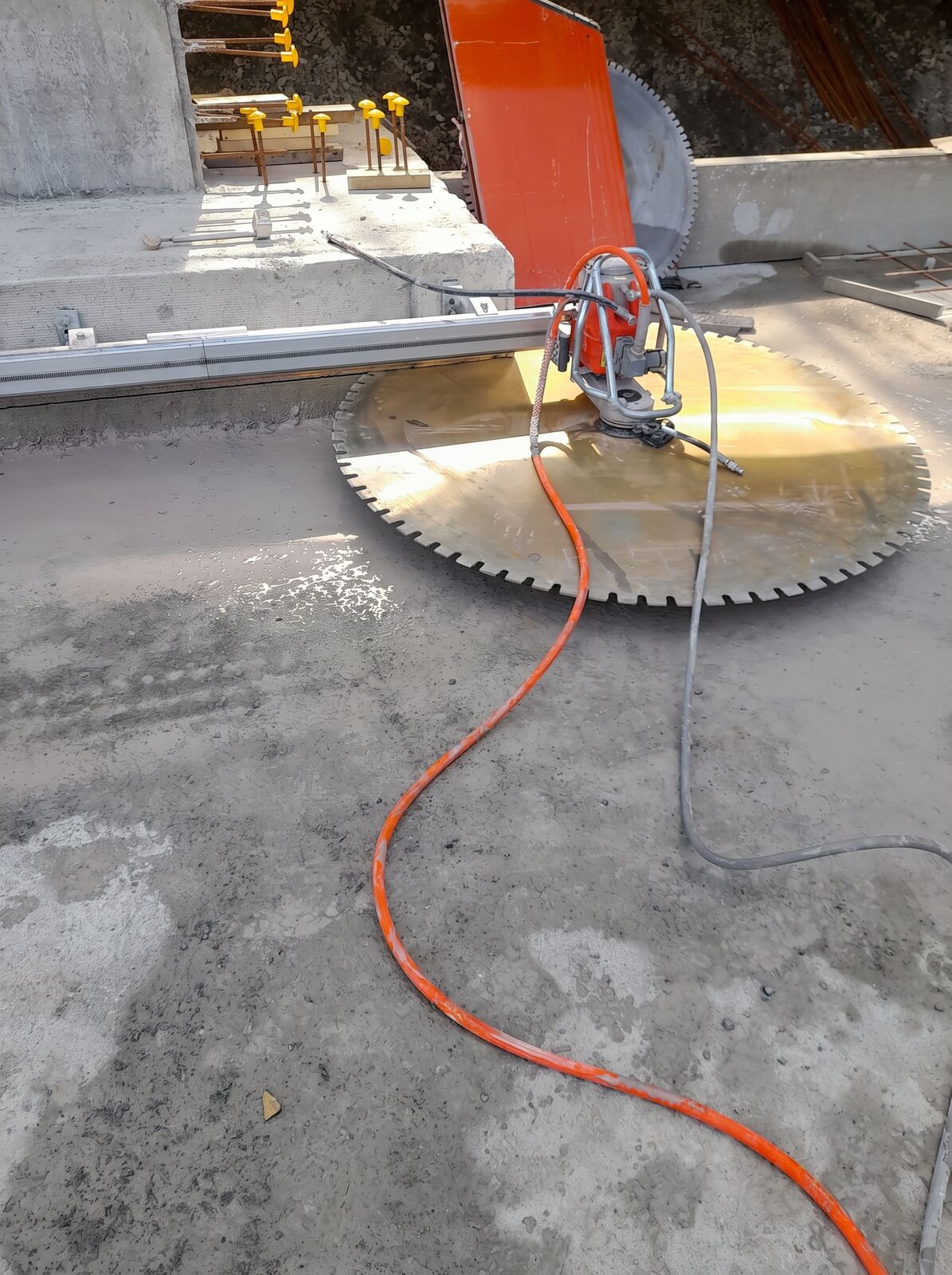
A large track wall saw with a big diamond blade set down on a concrete slab, the orange machine and water feed line on a reinforced concrete pour
Diamond blade for the deep cuts
A weathered concrete retaining wall in an excavated trench with a rectangular section cut out of it, the surrounding wall left standing and sound
A clean opening, the rest left standing

Controlled demolition, answered

The questions the crew gets asked most on this kind of job. Anything not covered here, call and we will talk it through.

Get a quote
There is no breaker hammering away at the concrete. We cut the section free with a diamond saw, then split it with a hydraulic burster and crush the pieces. None of those stages pound the structure, so the noise and the vibration through the building are a long way below a pecker or a jackhammer.
That is usually the reason a job comes to us. Cutting, bursting and crushing keep the dust and the racket down, so we can take out a section of concrete in a building that is still in use without shaking the rest of it or filling it with hammer noise. We agree the protection and the hours with you first.
We saw a clean line around the piece coming out so the break cannot run into the concrete you are keeping, and we prop and support anything that needs holding before we start removing. The result is the bit you wanted gone is gone, and the rest is left standing and sound.
Yes. The broken concrete, the rebar and the dust all leave site with us, with the steel and the concrete separated for recycling. Waste transfer paperwork can be provided if your main contractor needs it.
We are based in Ballyduff, near Tralee in Co. Kerry, and cover Kerry, Cork, Limerick, Clare, Tipperary and Waterford as standard. For larger jobs we travel across the rest of Ireland.

Get your free
quote today

Send us the details of your project and we'll come back with a fixed-price quote. No obligation.